- Born
- 1947
- In
- Pinehurst, North Carolina, USA
About
When the golf course construction boom began to hit the Myrtle Beach area of South Carolina in the 1980s, no one was in better position than Dan Maples. Of the 19 courses built on the Grand Strand in the decade, Maples created eight of them.
As the product of what some have called "the first family of Carolina golf," Maples was just coming of age in the business at an opportune time.
His grandfather, Frank Maples, was the longtime superintendent at Pinehurst and the construction engineer for legendary architect Donald Ross at several of his courses in the Sandhills. Frank's son, Ellis Maples, became a prolific architect, creating more than 70 courses, nearly all of them in the Southeast.
Dan Maples grew up playing golf at Pinehurst and working for his dad in the summers. He designed his first course at age 6 and was driving tractors before he received his driver's license.
At Wingate (N.C.) College, however, he studied data processing and accounting. When he moved to Georgia for his final two years of college, he pursued landscape architecture and soon after his graduation in 1972 joined his dad's firm.
Maples and his father created 17 golf courses together. Their best might be Grandfather Mountain in western North Carolina. They also designed two of the top resort courses in Virginia: Ford's Colony in Williamsburg and Devil's Knob in the Blue Ridge Mountains.
One of Dan Maples' first solo efforts was Oyster Bay in Sunset Hills, N.C. It was named the new resort course of the year by Golf Digest in 1983 and helped catapult Maples to much business on the Grand Strand. From 1986-89, he opened several acclaimed courses including Sea Trail and Sandpiper Bay in Sunset Beach, N.C. and Pearl East and Pearl West in Calabash, N.C.
By 1996, he finished three fun courses for Mystical Golf -- The Witch, The Wizard and Man O'War -- each with a separate and unmistakable theme.
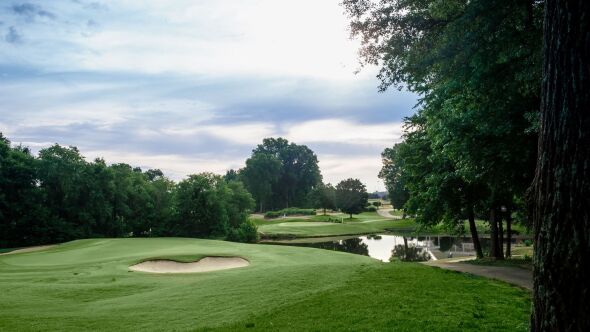
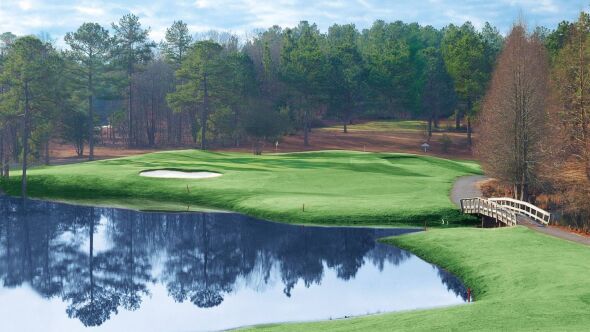
Maples' Grand Strand designs stand out for their routing through wetlands as do his large, uniquely shaped greens. A player good enough to win the American Society of Golf Course Architects tournament six times, Maples designs courses that demand accuracy over length, with everything in plain sight.
"I want to see as much of the green, I want to see as much of the landing area as I can," said Maples, who is grooming son Bradley to take over his business.
As the product of what some have called "the first family of Carolina golf," Maples was just coming of age in the business at an opportune time.
His grandfather, Frank Maples, was the longtime superintendent at Pinehurst and the construction engineer for legendary architect Donald Ross at several of his courses in the Sandhills. Frank's son, Ellis Maples, became a prolific architect, creating more than 70 courses, nearly all of them in the Southeast.
Dan Maples grew up playing golf at Pinehurst and working for his dad in the summers. He designed his first course at age 6 and was driving tractors before he received his driver's license.
At Wingate (N.C.) College, however, he studied data processing and accounting. When he moved to Georgia for his final two years of college, he pursued landscape architecture and soon after his graduation in 1972 joined his dad's firm.
Maples and his father created 17 golf courses together. Their best might be Grandfather Mountain in western North Carolina. They also designed two of the top resort courses in Virginia: Ford's Colony in Williamsburg and Devil's Knob in the Blue Ridge Mountains.
One of Dan Maples' first solo efforts was Oyster Bay in Sunset Hills, N.C. It was named the new resort course of the year by Golf Digest in 1983 and helped catapult Maples to much business on the Grand Strand. From 1986-89, he opened several acclaimed courses including Sea Trail and Sandpiper Bay in Sunset Beach, N.C. and Pearl East and Pearl West in Calabash, N.C.
By 1996, he finished three fun courses for Mystical Golf -- The Witch, The Wizard and Man O'War -- each with a separate and unmistakable theme.
Maples' Grand Strand designs stand out for their routing through wetlands as do his large, uniquely shaped greens. A player good enough to win the American Society of Golf Course Architects tournament six times, Maples designs courses that demand accuracy over length, with everything in plain sight.
"I want to see as much of the green, I want to see as much of the landing area as I can," said Maples, who is grooming son Bradley to take over his business.
Dan Maples Designed Courses Map
Dan Maples Designed Courses
-
![Crosswinds GC]()
-
![Apple Valley at Rumbling Bald: 8th green]() Lake Lure, North CarolinaResort
Lake Lure, North CarolinaResort -
![Beaver Brook GCC]()
-
![Bermuda Run CC]()
-
![Bermuda Run CC]()
-
-
-
![Capdepera GC]()
-
![Carrollwood CC]() Tampa, FloridaPrivate/Resort
Tampa, FloridaPrivate/Resort -
![Carrollwood CC]() Tampa, FloridaPrivate/Resort
Tampa, FloridaPrivate/Resort -
![Carrollwood CC]() Tampa, FloridaPrivate/Resort
Tampa, FloridaPrivate/Resort -
![Cedarwood CC]()
-
![Cherokee CC]()
-
![The Cramer Mountain Club]()
-
![Deep Springs CC]()
-
![Dunegrass CC]()
-
![Ford's Colony at Williamsburg - Blackheath: #18]() Williamsburg, VirginiaSemi-Private
Williamsburg, VirginiaSemi-Private -
![Ford's Colony CC]() Williamsburg, VirginiaSemi-Private
Williamsburg, VirginiaSemi-Private -
![Ford's Colony CC]() Williamsburg, VirginiaSemi-Private
Williamsburg, VirginiaSemi-Private -
![Forsyth CC]()
-
![Gates Four GCC]()
-
-
![Glenrochie CC]()
-
![Grandfather at Grandfather GCC: #1]()
-
![Hope Valley CC: #8]()
-
Buies Creek, North CarolinaSemi-Private
-
Buies Creek, North CarolinaSemi-Private
-
Kings Mountain, North CarolinaSemi-Private
-
Southern Pines, North CarolinaSemi-Private
-
-
Sunset Beach, North CarolinaResort
-
![Mountain Springs at Grandfather GCC: #7]() Linville, North CarolinaPrivate
Linville, North CarolinaPrivate -
![Natanis GC - Tomahawk: #18]()
-
![Olde Mill Resort]()
-
![Orchard GCC]()
-
-
![]() Vass, North CarolinaSemi-Private/Resort
Vass, North CarolinaSemi-Private/Resort -
![Providence CC: #1]()
-
Dandridge, TennesseePublic
-
-
Sunset Beach, North CarolinaPublic
-
Sunset Beach, North CarolinaPublic
-
Sunset Beach, North CarolinaPublic
-
![Sound Golf Links at Albemarle Plantation]() Hertford, North CarolinaSemi-Private
Hertford, North CarolinaSemi-Private -
-
![Tazewell County CC]()
-
-
Sunset Beach, North CarolinaPublic
-
Sunset Beach, North CarolinaPublic
-
Sunset Beach, North CarolinaPublic
-
-
![Walnut Creek CC]()
-
Whispering Pines, North CarolinaSemi-Private
-
Dandridge, TennesseePublic
-
Pawleys Island, South CarolinaSemi-Private
-
![Winchester CC]()
-
![Wintergreen Resort - Devils Knob]()
-
![Witch GC: Clubhouse]()